
Ball Sort - Color Puzzle Game
SATORISYS PLAYCasual
4.7223.00 Reviews
- Version
- 1.1.0
- Installs
- 100.00K
- Age Rating
- Everyone
Screenshots
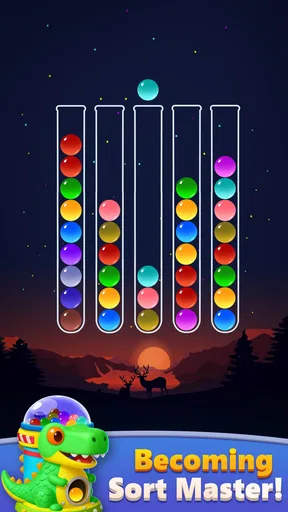
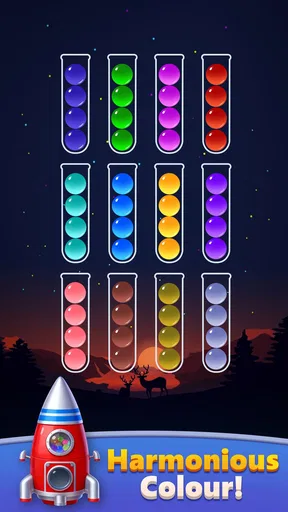
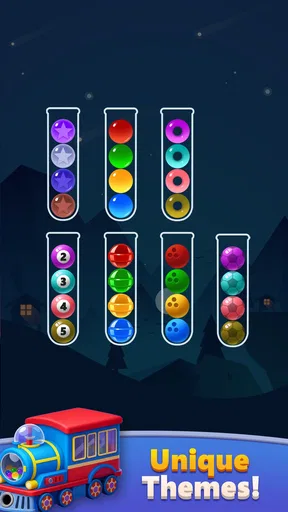
Our Review of Ball Sort - Color Puzzle Game
 Analysis by Appyee
Ball Sort - Color Puzzle Game is the kind of casual game I open when I want something simple to understand but not completely mindless. The idea is familiar: colored balls need to be arranged into matching groups, and each move has to be planned around the limited space available. It takes only a moment to understand the basic goal, yet a careless move can leave the whole board awkwardly blocked. That balance is what kept me playing longer than I expected.
Developed by SATORISYS PLAY, this free game sits firmly in the easy-to-pick-up puzzle category. It is suitable for Everyone, which matches the uncomplicated presentation and straightforward rules. The game has reached over 100 thousand installs and holds a 4.7 average from around 6 thousand ratings, so it has clearly found an audience among people who enjoy short sorting challenges rather than lengthy adventures or complicated strategy systems.
Getting comfortable with the sorting routine
My first few rounds felt almost like a tutorial even without needing much explanation. I tapped a container to select its top ball, then chose another container as the destination. The important detail is that the visible top ball is the one that matters; deeper balls are temporarily unavailable until the pieces above them have moved. That makes every board a small exercise in reading the current position instead of reacting only to the color I want next.
The main place I expect new players to get stuck is assuming that a matching color should always be moved immediately. Sometimes that is correct, but sometimes the move hides a useful ball underneath or fills the only spare space you need later. I found it more reliable to look at the whole row of containers before touching anything. Identify which colors are exposed, notice where the empty room is, and only then start committing moves.
The spare container is not merely a parking place; it is your planning space. I try to keep at least one flexible opening available whenever possible. Filling every container too early can make a simple board feel impossible, even when the colors themselves are nearly sorted. This is one of the first habits that separates calm progress from random tapping.
Why an easy board can still require patience
The casual label is accurate, but it should not be confused with automatic success. The game is accessible because the rules are light, not because every decision is harmless. A move that looks productive can reduce your options several turns later. I especially noticed this when I combined a few matching balls and then discovered that the next needed color was trapped beneath a different stack.
When I reach that point, I stop trying to repair the board through faster moves. Instead, I mentally trace the top ball in each container and ask which move will reveal the most useful next piece. This approach is slower for a few seconds but usually prevents a chain of desperate taps. It also makes the game feel more like a compact logic exercise than a reflex challenge.
For a short session during a commute, a waiting room, or a break between tasks, that rhythm works well. I can play a little without needing to remember a story, manage a character, or learn a large control scheme. The trade-off is that players looking for action, narrative, competition, or a strong sense of progression may find the experience too narrow.
Small setup checks before blaming the game
Because this is a touch-based sorting game, the first practical check is very basic: make sure the tap lands on the container rather than near its edge or between two pieces. On a small phone screen, an imprecise touch can look like an ignored move. I found that tapping the center of the intended container and waiting for the board to respond is more dependable than rapidly tapping several places.
If a move seems not to happen, I would first pause and check whether the selected ball can legally go into the chosen container. A different color at the top, a container that is already occupied in a way that prevents the move, or a destination without enough room can all make a tap appear unsuccessful. Repeating the same tap will not solve a move that the puzzle position does not allow.
The game is free, and its current version is 1.1.0. It supports devices running Android 7.1 or later, so compatibility is worth checking before spending time troubleshooting. If the device uses an older system, installation or normal operation may be the real obstacle rather than the puzzle itself. On a supported phone, closing other demanding apps and reopening the game is a sensible general step if touch response feels delayed.
I also recommend checking the obvious device conditions: enough free storage for installation, a responsive screen, and a battery-saving mode that is not aggressively limiting the app. These are not special requirements of the puzzle; they are common causes of confusing behavior on mobile devices. A quick restart can help when the phone itself has become sluggish, especially after many apps have been left open.
Recovering from a board that feels ruined
One of the most useful skills here is recognizing when to stop digging. If every container is crowded and the remaining colors are buried in an inconvenient order, continuing to make random moves usually makes the position harder to read. I prefer to take a short pause, inspect the top layer again, and identify whether there is a genuine route forward or whether I have simply consumed all the flexible space.
When a level can be restarted, beginning again with a different opening sequence is often more effective than trying to rescue a poor arrangement. I would not treat a restart as failure. In sorting puzzles, the first attempt frequently teaches you which color needs to stay accessible and which container should remain open. The second attempt can then be more deliberate, with fewer experimental moves.
A practical recovery method is to separate the board into three mental groups: colors already close to completion, colors that are blocking other pieces, and colors that are currently irrelevant. Complete groups are valuable, but they should not tempt you to fill every available space if doing so hides a blocker. The blocking group deserves attention first, while the irrelevant group can often wait until the board opens up.
Another useful habit is to avoid moving a single ball simply because it matches another color. Before doing so, ask what becomes visible afterward and whether the destination remains useful. A matching move that exposes a new ball and preserves an empty container is usually stronger than one that merely makes a stack look tidier. That distinction is easy to miss when playing quickly.
When the problem is probably outside the app
Not every interruption is caused by Ball Sort. If the game closes while other apps are also freezing, the phone may be under general system strain. If taps fail in several applications, a screen or device issue is more likely than a puzzle-specific fault. Checking another simple app can help separate a local touch problem from a problem with this particular game.
Installation trouble should also be approached in stages. I would confirm the Android version first, then check available storage, then retry through the normal app store process. If the device meets the stated minimum but the problem continues, restarting the phone and ensuring the store application is functioning normally are reasonable next steps. I would avoid downloading unfamiliar copies from unofficial sources, since that creates a separate security risk and does not improve the puzzle experience.
A slow response can sometimes be mistaken for an invalid move. Rather than tapping repeatedly, wait briefly after the first touch. Multiple rapid taps can make it harder to tell which action the game registered. This is especially important when moving between nearby containers, where a hurried finger can select the wrong one and produce a result that looks random.
The same principle applies to frustration with difficulty. If the board is behaving consistently but the solution is not appearing, that is usually a planning issue rather than a technical fault. I found that stepping away for a minute helped more than force-closing the game. Returning with a fresh view made the available routes easier to see, particularly after I had been repeating the same unsuccessful pattern.
How it compares with other casual puzzle choices
Compared with match-three games, this one asks for less visual speed and more forward planning. There is no need to chase falling pieces or react to a changing board; the challenge comes from arranging what is already in front of you. That makes it a better fit for someone who prefers quiet concentration, while match-three alternatives may be more satisfying for players who want bright effects, rapid turns, or a stronger feeling of immediate reward.
Compared with word puzzles, Ball Sort avoids language dependence. The task is based on color recognition and position, so it can be easier to pick up when I do not want to read instructions or think about vocabulary. The downside is a narrower type of mental challenge. Someone who enjoys discovering definitions, clues, or patterns in language may find the sorting loop repetitive after a while.
It also differs from larger logic games that build elaborate campaigns around several puzzle types. Ball Sort is more focused. That focus is a strength when I want a quick, predictable activity, but it is a weakness if I expect varied mechanics or a deep progression system. I would choose it for a few minutes of orderly problem-solving, not as my only puzzle game.
Who will enjoy it, and who should skip it
I think it suits casual players who like visual organization, small decisions, and a gentle learning curve. It is also a good choice for someone introducing a child or a less experienced player to sorting puzzles, since the basic interaction is easy to understand and the Everyone rating supports that broad audience. Adults who enjoy tidying, categorizing, or planning several steps ahead may find the simple format surprisingly absorbing.
I would be more cautious about recommending it to people who need constant novelty. If you want character development, multiplayer competition, a story, or a demanding strategic system, this game is unlikely to replace those experiences. Players who dislike repeating a similar sorting loop may also lose interest once the basic decision pattern becomes familiar.
Color perception is another personal consideration. Since the central task depends on distinguishing balls by color, anyone who finds closely related shades difficult may have a less comfortable experience. In that situation, a puzzle with symbols, letters, or clearly different shapes could be a better alternative. That is not a flaw in the core idea, but it does affect who will find the board immediately readable.
My practical way of playing
For everyday use, I would open it when I have enough attention for a small puzzle but not enough time for a full game session. I might play while waiting for an appointment, then stop after a board rather than trying to turn the session into a long commitment. The lack of a complicated setup is part of its appeal: I can focus on the arrangement immediately.
My preferred workflow is to scan first, move second. I look for the colors that are already exposed, locate the open space, and identify any ball that is blocking several useful pieces. I then make the move that creates the most future options, even if it does not produce the neatest-looking stack right away. This makes the game less dependent on guesswork and gives each tap a clear purpose.
If I make a poor opening, I do not spend several minutes defending it. I restart when the position has become too crowded to manage and use what I learned from the attempt. That approach is especially helpful for players who become annoyed by avoidable mistakes. The game rewards patience, but it does not require treating every attempt as a serious test.
One trade-off is that the minimalist concept can make mistakes feel more noticeable. There are no complicated systems to distract from a bad decision, so the entire result rests on how well I managed the containers. For me, that is satisfying in short bursts. For someone who wants a more forgiving or more animated casual game, it may feel plain.
Final thoughts on the free puzzle experience
Ball Sort - Color Puzzle Game succeeds because it keeps its central idea clear. I can understand the objective quickly, yet the limited room encourages enough planning to make each board meaningful. Its free price, Everyone rating, broad Android compatibility from version 7.1 onward, and casual format make it easy to consider for a wide range of players. The 4.7 average and over 100 thousand installs also suggest that its straightforward approach has connected with many users.
My recommendation comes with a clear condition: install it if you enjoy calm, color-based logic and short sessions, not if you are searching for a large game with varied content. The most important adjustment is to treat empty space as a resource, inspect the exposed balls before moving, and restart thoughtfully when a board has become too constrained. Those habits turn the experience from random tapping into a manageable routine.
The developer, SATORISYS PLAY, has made a focused casual game rather than an overloaded one. I appreciate that focus, although it naturally limits long-term variety. For a quick mental break, I would happily keep it available on my phone. If you want a simple sorting challenge that rewards looking ahead, this is an easy recommendation; if you need action or constant change, choose a different kind of puzzle.
Verdict
Strengths of Ball Sort - Color Puzzle Game
- Simple drag-and-drop controls are easy for players of all ages.
- Short levels make it convenient for quick breaks or casual play.
- Colorful visuals keep the sorting process clear and engaging.
- Gradually harder puzzles provide a steady sense of progression.
- Offline play works well when you have no internet connection.
Limitations of Ball Sort - Color Puzzle Game
- Later levels can feel repetitive once the sorting pattern becomes familiar.
- Some puzzles may require undoing several moves after one small mistake.
- Hints or extra moves may be limited unless rewarded or purchased.
- The game offers little variety beyond its core color-sorting mechanic.
- Frequent ads may interrupt play, especially between completed levels.
Other Releases by SATORISYS PLAY
View All


Similar Picks in This Category
View All
My Talking Angela
Outfit7 Limited4.2

My Talking Tom
Outfit7 Limited4.3

Pou
Zakeh4.2

My Talking Tom 2: Pet Game
Outfit7 Limited4.3

Candy Crush Saga
King4.6

Bridge Race
Supersonic Studios LTD4.1
Frequently Asked Questions
What is Ball Sort - Color Puzzle Game and how does it work?
Ball Sort - Color Puzzle Game is a relaxing logic puzzle in which you organize colored balls inside tubes or containers. The objective is to place balls of the same color together, usually moving only the top ball and following the available capacity in each tube. The early stages are simple, but later levels require careful planning, patience, and sometimes working backward from the final arrangement.
Is Ball Sort - Color Puzzle Game free to download and play?
The game can generally be downloaded and played for free, although the exact monetization system may depend on the Android or iOS version available in your region. You may encounter advertisements, optional hints, extra tubes, or other in-game purchases. Before downloading, check the store listing for current pricing, advertising details, and whether any features require payment.
Does Ball Sort - Color Puzzle Game require an internet connection?
Most of the core sorting puzzles can usually be played without a constant internet connection, which makes the game convenient for travel or short offline sessions. However, advertisements, cloud synchronization, updates, leaderboards, or certain bonus features may require access to the internet. Availability can vary by version, so test the game offline after installation if this is important to you.
Is Ball Sort - Color Puzzle Game suitable for children and beginners?
The basic rules are easy to understand, making Ball Sort suitable for beginners and casual players. It does not normally require fast reflexes, so children can enjoy it as a color and logic exercise. Nevertheless, some levels become surprisingly challenging, and younger players may need help understanding strategic moves, undo options, or the consequences of filling a tube too early.
What should I do if I get stuck on a level?
If a level seems impossible, avoid moving balls randomly because unnecessary moves can remove useful options. Start by identifying colors that can be completed quickly and keep at least one empty tube available whenever possible. You can also use the undo function, restart the level, or spend a hint if the version you installed provides one. Taking a short break often helps reveal a better sequence.
Play our best games!


